TOOLS, STORIES, and MORE

Sonder
I am paying closer attention to people around me. I remember being in a grocery store, standing behind an elderly man with his cart full of produce. Normally, I would have been impatient, mentally running through my to-do list. But in that moment, I wondered about him — about the years that had brought him to this grocery aisle, his memories, and the life he’d lived. It felt like I could almost see the story etched in his face: moments of hardship, resilience, and love. It changed how I felt about that entire experience.

Ubuntu
I’ve been thinking a lot about the concept of Ubuntu, thanks to my marketing guy in South Africa, George, who reminded me of this beautiful philosophy as we discussed some themes in my work and business. Ubuntu is an African philosophy that Archbishop Desmond Tutu described as “the essence of being human.” It’s often translated as “I am because we are” or “humanity towards others.” Ubuntu means recognizing that our lives are intricately connected, that we don’t exist in isolation but as part of a greater whole. It’s about community, compassion, and understanding that, on this journey of life, we truly need one another.

Scarcity of Self
It’s easy to fall into the rhythm of doing. The checklist, the expectations, the roles we inhabit—they give us purpose, or at least the illusion of it. We move from one task to the next, robotically fulfilling what’s required. Day in, day out, it feels like enough. Or maybe it just feels necessary.
But somewhere beneath the surface, there’s a quiet unease. A tug you can’t quite name. A nagging feeling that something is missing—not in the world around you, but within you.

Time As A Friend
In our modern lives, it can feel like we’re living out a scene from the movie Twister—except instead of cows, cars, and houses swirling around, it’s grocery lists, emails, spreadsheets, coffee cups, holiday party outfits, Pelotons, and that endless to-do list. Every second counts, so we’re in a constant race to move from one activity to the next, trying to keep up as if each task holds the key to survival. While the storm of tasks can’t simply be paused, learning to slow down and reclaim time can bring relief and clarity. Here are three ways to manage time better, restore balance, and start treating time as a friend, not an enemy.

Scotosis: Truth We’d Rather Not See
In our lives, there are certain truths or facts we’d rather not see. Maybe it’s the plight of the homeless in our own city or the reality of climate change, wealth inequality, or the dangers of addictive drugs. When we choose to ignore these issues, even if we know they’re important, we’re falling into a trap called scotosis—a kind of willful blindness or intellectual blockage. Scotosis can prevent us from making good decisions for ourselves and for society, and learning to recognize it can help us grow in wisdom, compassion, and accountability.
Scotosis is a term that emerged within the last century to describe the willful ignorance or selective blindness that we, individually or collectively, often display when facing inconvenient truths. It’s more than just not seeing something; it’s choosing not to see it, sometimes even unconsciously. Scotosis usually happens when a certain fact or idea challenges our beliefs, threatens our comfort, or disrupts systems that are profitable or convenient.

Triggers in the Workplace
Why did my colleague snap at me? What did I do to them? I didn’t deserve that.
I found myself reeling after Brian (not his real name) laid into me about a suggestion I made on a project we were both working on. My thoughts alternated between offense and defense as I recalled the situation over and over. I started for the door to let him have it with a tongue thrashing and a finger waving, only to make myself sit down again feeling some weird sense of shame that maybe something was wrong and deficient with me, and my suggestion was really dumb.

Problem solving
A friend was telling a story about living overseas. She had reasonably nice accommodations, but occasionally while she was showering, the pilot light would go out on the hot water heater. She had a choice to make, either she would take her soaped-up self, wrapped in a towel to re-light the pilot light, or she would be miserable in a cold shower.

Algorithms, Insecurities, and Mindset
It’s no secret that social media algorithms are designed to keep us engaged, but there’s a hidden cost to that endless scroll. Many of us find ourselves bombarded by posts that touch on insecurities about our lives: spotless homes, perfect parenting, the latest eating and exercise trends, and the pressure to plan idyllic vacations. In this constant parade of “expert” opinions, it’s easy to feel like we’re never quite good enough. And these insecurities aren’t just random; they’re deeply human.
Our brains are wired to crave certainty. From a design perspective, seeking out definitive answers was crucial to survival. Knowing which berries were safe to eat or how to build a shelter could mean the difference between life and death. Today, our need for certainty extends to understanding ourselves and our place in the world. The brain’s constant question is, “Am I doing this right?”
Social media algorithms pick up on these vulnerabilities. When we pause on a post about perfect organization, strict parenting advice, or the latest diet trend, it sends a signal to the algorithm that we’re interested. The algorithm then supplies more of the same, amplifying these themes in our feed until we’re steeped in a narrow view of “perfection.” This cycle plays to our insecurities and reinforces our belief that there’s one “right” way to do things.

Reality Shift
I remember the moment of clarity vividly: I was driving on the Mass Pike, grappling with the tension between my lived reality and the truths I was told to accept. The facts in front of me—the harm to myself, the strain on my children, the disconnect between my beliefs and my experience—were undeniable. For the first time, I allowed myself to pause and truly see. And in seeing, I understood: I could choose differently.
“Resilience is the capacity to face reality, and to act according to the data that you see in front of you.”
— Bessel van der Kolk

Burnout Is Not Failure
"Burnout is an expectation to plan for instead of being seen as failure." -Jessi Gold

Making Space for Sorrow
"The expectation that we can be immersed in suffering and loss daily and not be touched by it is as unrealistic as expecting to be able to walk through water without getting wet. This sort of denial is no small matter. The way we deal with loss shapes our capacity to be present to life more than anything else. The way we protect ourselves from loss may be the way in which we distance ourselves from life and help. We burn out not because we don’t care but because we don’t grieve. We burn out because we’ve allowed our hearts to become so filled with loss that we have no room left to care."
The Power of a Reset
Have you ever felt like your thoughts, beliefs, or actions were headed in an unhelpful direction? As though you were caught in a loop, where everything you did or thought seemed to take you further away from where you wanted to be? I’ve been there. Years ago, during a cruise for a friend’s 50th birthday celebration, I found myself in the midst of a seismic personal reset. My life had taken a sharp turn as I left a toxic marriage and organization at the same time, and I was trying to rebuild my life, my beliefs, and even my sense of self.
I was learning to rewire my thoughts, listen to my gut, and embrace my emotions in a way I never had before. It was a time of great emotional turmoil, but also of great discovery. I had spent years living in a system of certainty, one that told me how to think, feel, and act, and now, stepping outside of that system, everything felt unfamiliar. The world outside seemed unsettling; fear had wrapped me up in a dark cloud.
Critical Thinking
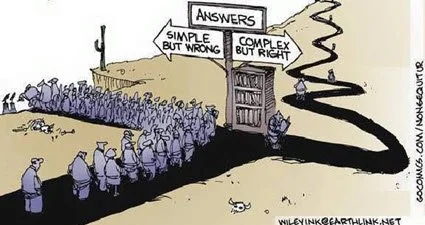
Recently, I attended a lecture that left me unsettled. The concepts were familiar, but something felt off. The speaker had an air of authority, confidently presenting his views—but he cited only one source. He spoke in absolutes, painting the world in black and white. And in doing so, he subtly (and not-so-subtly) positioned himself as the one with the “right” answers.
At first, I found myself slipping into his binary way of thinking: us vs. them, right vs. wrong, good vs. bad. But then, I remembered Adam Grant’s advice on becoming a better critical thinker:
1️⃣ Be 10% more skeptical of people you agree with—and 10% more charitable to people you disagree with.
2️⃣ Look for flaws in ideas you like—and strengths in arguments you dislike.
3️⃣ Learn from sources that engage with competing ideas.
So, I listened again—with a different ear.

Kihelakayo: Keep Going, Even in the Storm
A young man once asked his Lakota grandfather what the answer was to life’s difficulties.
The old man replied with a single word:
“Kihelakayo.”
“Keep going.”
This simple phrase carries profound wisdom—because life is both joy and pain, light and shadow. The call to Kihelakayoisn’t about denial or toxic grit. It’s about choosing to face discomfort head-on, with awareness, with intention, and with support.

Jay Kay: Just Kidding or Just What I Needed?
I was walking along the marina one afternoon, my mind in overdrive. It had been one of those days—the kind where your brain feels like a browser with 37 tabs open, 4 frozen, and one playing music you can’t find. Deadlines loomed, emotions simmered just beneath the surface, and my thoughts were tangled like fishing line.
And then I saw it.
A small boat, gently rocking in the water.
Painted in bold letters on the side: Jay Kay.
I stopped.
At first glance, it seemed like an ordinary name—maybe someone’s initials. But then I said it out loud: “Jay Kay.” And instantly, my brain translated: JK.
Just kidding.
Was this boat a floating dad joke? A clever wink to passersby? A message from the universe?

Women and the Truth About Anger
For many women, anger isn’t absent—it’s just hidden.
It simmers beneath smiles, polite responses, and phrases like “I’m fine.” It hides behind stomachaches, sleepless nights, and over-apologizing. For generations, women have been taught—explicitly and implicitly—that expressing anger is unseemly, unladylike, and even ungodly.

When Shame Speaks Loudest: Learning to Listen Differently
Guilt can motivate us to make things right. Shame leaves us paralyzed, disconnected, and believing we are unworthy of love or belonging.
This difference became vividly real to me the morning my 16-year-old daughter proudly showed me her shiny new driver’s license—and later that same week, backed into our neighbor’s car.
First came guilt: “Oh no! I can’t believe I did this. I’m so sorry. I’ll pay for the damage.”
Then shame crept in: “I’m so stupid. What’s wrong with me? I’m a terrible person.”
Her body shrank. Her face flushed. Her eyes filled. I saw her move from a sense of I made a mistake to I am a mistake—and I knew we were no longer talking about a dented bumper.
So I reminded her: “Accidents happen. This is why Arnold Schwarzenegger sells insurance.” But more importantly, I reminded her of who she is—not what she did.
Because shame is not a necessary part of the human experience. Guilt? Sure. Responsibility? Absolutely. But shame? Shame is a lie that corrodes our sense of self.
Resilience: The Power to Rise Again
Pain and suffering are a part of life. This is not a pessimistic statement—it’s a truth that allows for profound freedom when accepted. Because once we stop resisting the reality that hardship comes for us all, we can begin to explore what it means to live through it, learn from it, and even grow because of it.
Resilience is not about avoiding pain; it’s about what we do with it.
Resilience is the ability to face adversity, overcome obstacles, and adapt in the face of significant stress or trauma. It’s the quiet, powerful force that enables some people to bounce back from heartbreak, loss, illness, or betrayal—not by forgetting or minimizing the experience, but by transforming it into something meaningful.
In her book Energy Rising, Dr. Julia DiGangi writes:
“The truth about pain is you can never eradicate it; you can only transform it. There is no energy on the planet that can be destroyed. Because your negative emotions are, quite literally, a neurobiological energy, they’re governed by the laws of physics; while energy can’t be destroyed, it can be transformed.”
Resilience, then, is not about being invulnerable—it’s about transformation. Turning wounds into wisdom. Turning mess into meaning.
Sorting Through the Stuff
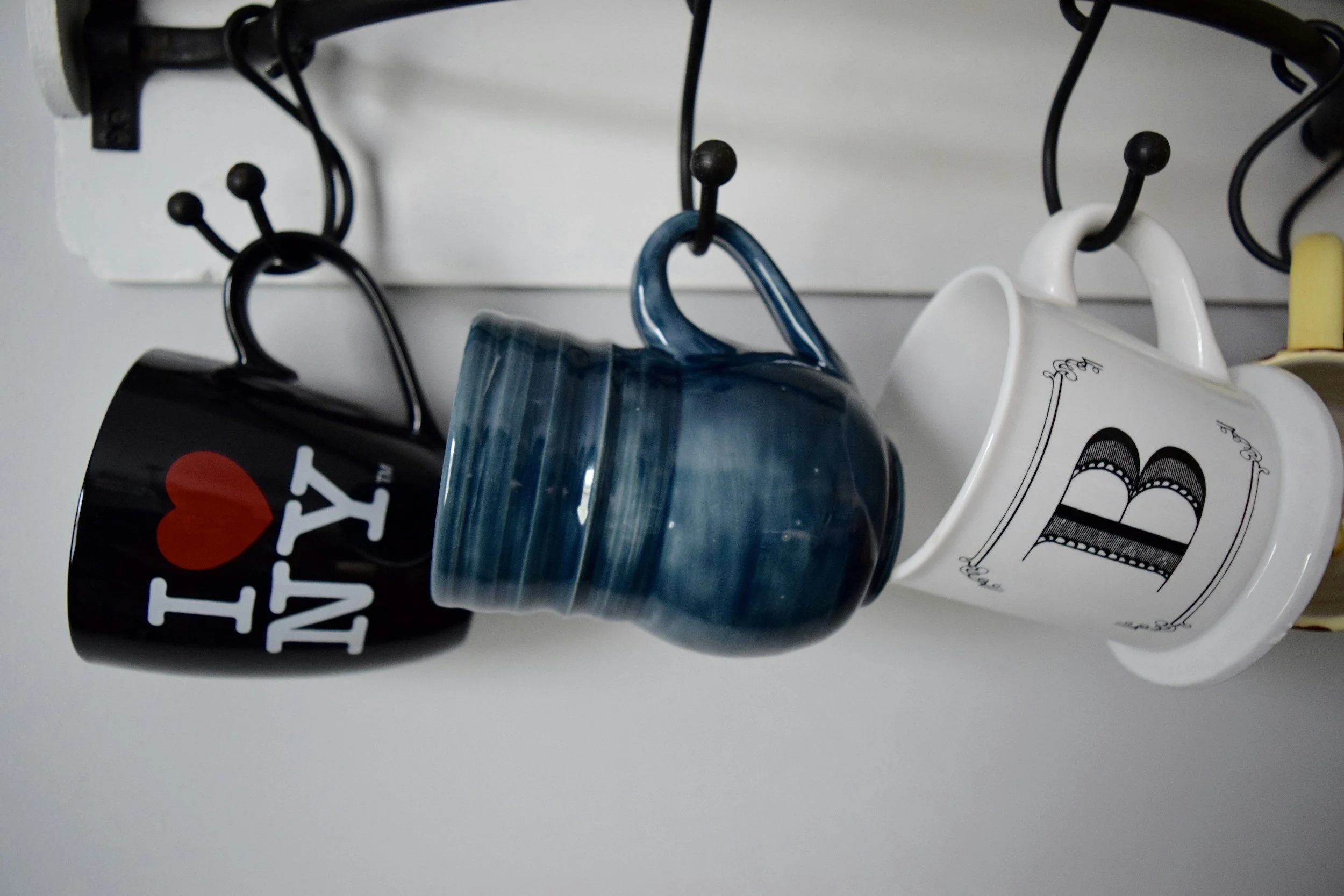
Thinning out my dad’s things is one of the most tender, overwhelming tasks I’ve faced in recent memory. It’s not just a matter of “stuff”—it’s a timeline, a museum, a story of a life. The Christmas décor in boxes that smell like dust and cinnamon. The four full sets of china, used countless times while hosting family and friends. The hundreds of ball caps from every gas station, ballpark, and tractor supply store from the Pacific Ocean to the Atlantic. Nails and screws sorted with care, fifty screwdrivers—some rusted, others brand new. Mugs from Mt. Rushmore, one shaped like a recycle bin, one that says “World’s Greatest Dad.” Souvenirs from every road trip: tea towels, candles, keychains and even a few stuffed animals. High school yearbooks and decades of sentiment packed into boxes, bags, and shelves.
It’s a sacred and exhausting ritual—deciding what is junk, what should be donated, and what is worth keeping. Each object must be touched. Considered. Felt. Does this bring me joy? Or only sentimentality? Is it honoring his memory, or weighing me down?
The process is more emotional than I expected. Because really, it’s not just about his things. It’s about change. Grief. Identity. It’s about honoring what was while making space for what is.

When You’re the Center of the Sandwich
Welcome to what’s often called The Sandwich Generation—a season of life where you find yourself in the middle of two worlds, caring for aging parents while still actively raising children. You’re fielding calls from doctors and teachers, coordinating family dinners and therapy appointments, and trying—somehow—to still have a sense of self. It’s a unique pressure point where love, obligation, and exhaustion collide.
May is Mental Health Awareness Month, and there's no better time to pause and reflect. Not just on your to-do list, but on your emotional bandwidth, your needs, and your support system. Because the truth is, this middle space isn’t just about logistics. It’s deeply emotional, often confusing, and occasionally beautiful.
We often talk about the “sandwich” in terms of being pulled between parents and kids, but that pull has real consequences for how we show up in each relationship. Your children may be growing up in a home where love and care are abundant—but so is stress. They may notice the tension in your shoulders when you get off the phone with your dad, or the way your calendar is always full. They’re watching, learning, and absorbing, even if they don’t always have the words to express it.
Your children have their own needs for attention, reassurance, and emotional attunement. They need structure and flexibility, safety and play, honesty and presence. And when you’re dividing your emotional energy between generations, something often feels like it’s falling short.
So how do you do it all?