TOOLS, STORIES, and MORE
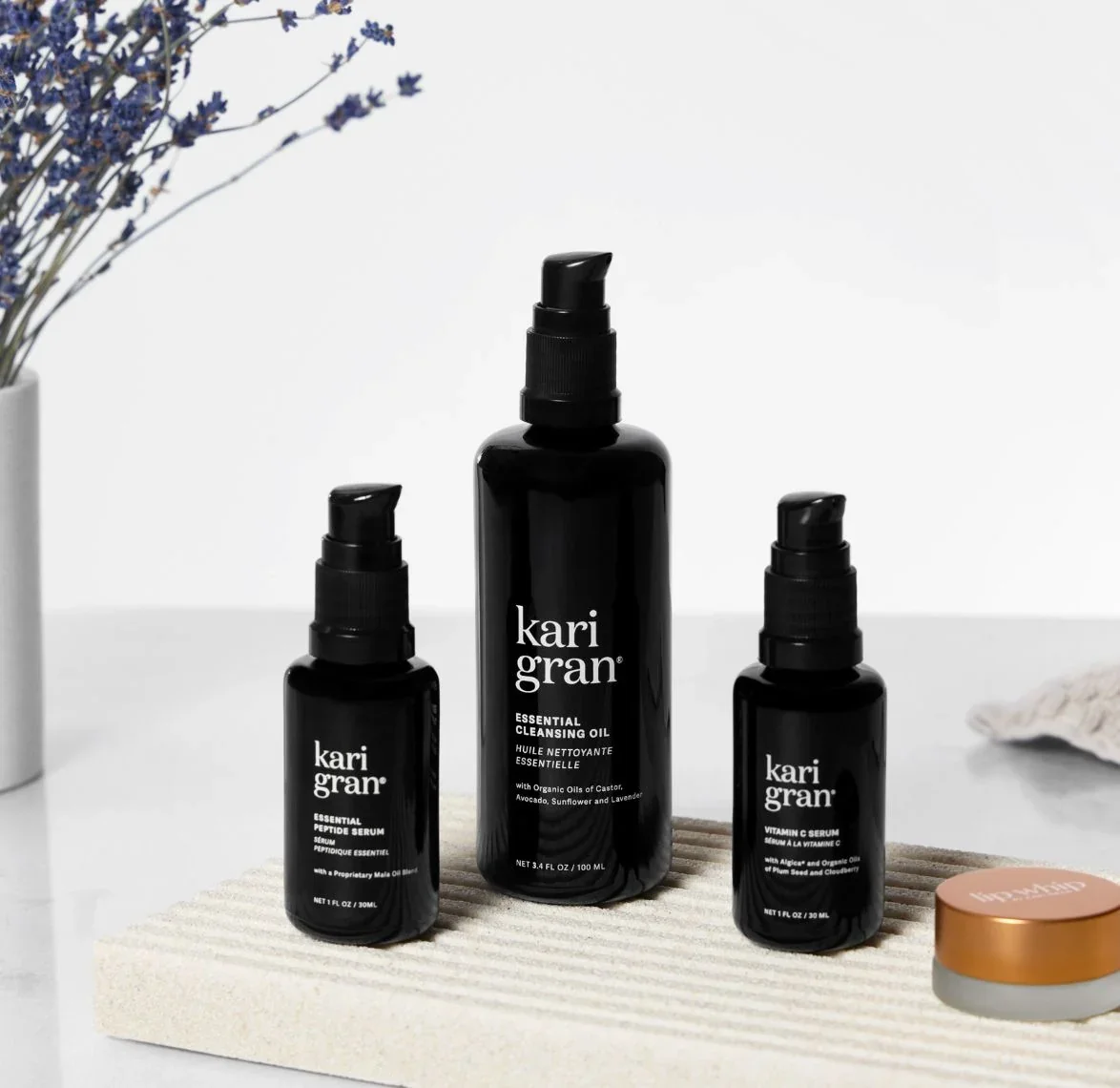
The Midlife Collective: Because One Expert Is Never Enough - With Kari Gran, Skin and Reinvention
…how to find answers, advocate for ourselves, and make choices that actually feel right for the women we are becoming.
Kari's story is a perfect example.
At 29, she was diagnosed with Graves' and Hashimoto's disease, autoimmune thyroid conditions that changed how she thought about her health, her body, and the products she was putting on her skin. A longtime beauty junkie, Kari had spent years loving products and buying into an industry that often promised more than it delivered. As she began reading ingredient labels and reconsidering what she wanted to put on her body, she started asking better questions.
What is actually good for me? What am I buying into? And why are we so determined to look younger rather than feel healthier?
Then came another midlife-sized question: What if I did something entirely different?

Feed the Woman You Are Now
*I am a huge fan of science and evidence-based research. This interview is chock-full of them. Evidence-based research helps us separate what is supported by credible science from what is simply trending, so before we invest in a product or adopt a belief, let's get curious, check the quality of the research, and ask whether there is enough reliable evidence to back it up.
I'm thrilled to introduce you to Marissa, a registered dietitian nutritionist and intuitive eating counselor who brings a refreshing perspective to women's nutrition and health. Her approach challenges the old rules we've been handed about food, weight, and our bodies, and invites us to get curious about what we actually need in this season of life.
Because here's the thing: midlife is not a problem to fix, and our bodies are not projects that need constant improvement. As Marissa explains, we can use nutrition science to make informed choices without turning it into another rigid set of rules.
Read on for Marissa's insights on metabolism, muscle, protein, carbohydrates, intuitive eating, and what it really means to feed the woman you are now. I think you'll love what she has to say.

It’s Not Just in Your Head: What is Actually Happening in Your Body During Midlife
"Can you just tell me what I need to do?"
I hear this all the time in mental health and couples counseling. And honestly, I get it. When you are exhausted, anxious, angry, disconnected, or confused, sometimes you do not want another question. You want an answer.
Raise your hand if you have gone to the doctor or psychiatrist, had your blood pressure taken, stepped on the scale, answered a few questions, and then looked at your provider with baited breath, hoping they will tell you exactly what is going on.
Can't they see your anxiety? Your hot flashes? Your sleepless nights? The brain fog? The fatigue? The anger that seems to come out of nowhere? Can't they see that you are caring for aging parents while sending your kids off to school, managing a career, navigating a relationship, and trying to remember whether you actually drank enough water today?
We want someone to connect all the dots for us.

Back to School Blues
I feel empty.
No more butts in the bleachers. Too much food in the fridge. No one raiding the pantry at 10 p.m. No one asking where their favorite hoodie is when it is sitting directly in front of them. It is like Mary Poppins is showing up, talking, singing and dancing about how change is in the air, except I am not quite ready for the song.
My youngest is beginning her last year of college today. And yes, I know, quarter systems are weird. Somehow this means I have one more year of college parenting before I officially become an empty nester. I cried writing this. The pain is still lingering, and I can feel it from the top of my head to the tips of my toes. I love those kids so much.
And that is the thing about launching a child. It is not just about where they are going. It is about what their leaving stirs up in you.

The Third Turn: What Horses Can Teach Us About Midlife
There is something about watching the third turn of a horse race that feels a lot like midlife. The horses have already covered much of the track. They have found their rhythm, burned energy, experienced the jockey's direction, and navigated the competition around them. Then they enter the third turn, and suddenly the finish line is in sight.
The horses are heading into the home stretch. Every stride matters.
That feels a lot like midlife to me.
We are no longer at the beginning of the race. We have lived enough life to know some things. We know what drains us and what energizes us. We know which relationships nourish us and which leave us depleted. We know what we have survived. We know what we are capable of. We have made mistakes, recovered from disappointments, changed our minds, raised children, built careers, ended relationships, started over, cared for aging parents, and perhaps even lost ourselves along the way.

System Malfunction
Plug into a reliable wall outlet, hold the power button for 10 seconds, and let it charge for 15-20 minutes. Check the cable and adapter for damage. Listen for the startup chime. Look for the keyboard to light up.
This might sound like instructions for a computer, and in fact, it is.
One night, I did the ceremonious closing of my MacBook. I finished what I was doing, closed the lid, and went to bed. The next morning, I opened it and got nothing. No familiar glow, no startup chime, no keyboard lights. Just a black screen.

The Clock is Not Your Enemy
When we get stuck in an anti-aging mindset, we can begin to experience time as something chasing us rather than something we are living inside. The clock becomes an adversary. We start measuring ourselves against what we used to look like, what we used to be able to do, where we thought we would be by now, and what we believe we have lost. There is always another wrinkle to fight, another pound to lose, another treatment to try, another milestone we should have reached. Instead of inhabiting our lives, we can find ourselves managing our decline before we have even experienced it.
And that mindset is exhausting.
There is a difference between caring for yourself and fighting yourself. I can exercise because I want to be strong. I can eat well because I want to have energy. I can use skincare, color my hair, take medication, consider hormone therapy, or have a procedure because I enjoy how it makes me feel. None of those things have to mean that I am at war with my age. The question is not, "How do I keep myself from aging?" The question becomes, "How do I want to care for myself as I age?"
That feels like a very different conversation.

Menopause and the Workplace: Why 41 Million Women Can No Longer Be an Afterthought
She is leading the meeting. Managing the budget. Mentoring younger employees. Caring for aging parents. Texting a college-aged child between presentations. And trying to remember why she walked into the conference room in the first place.
If this feels familiar, you are not alone.
More than 41 million women over the age of 40 are currently in the U.S. workforce. We are not talking about a niche population. We are talking about a significant portion of the talent, leadership, expertise, and institutional knowledge that keeps organizations running.
And here is the part that should make every employer pay attention:
The average age for a woman to assume her first executive leadership role is approximately 54.
The average age of menopause is 51.
Many women will spend 15 years or more of their working lives in the menopausal stage.

Jennifer’s Story
Jennifer sat across from me, tears filling her eyes.
"I don't recognize myself anymore," she said.
She wasn't talking about a major life crisis. She wasn't talking about losing herself in the way we often imagine. She was talking about looking in the mirror and not seeing the woman she remembered.
Her body had changed.
Her clothes fit differently. Her waistline had shifted. Her skin felt different. Her hair no longer behaved the way it once did. She noticed her eyelashes were thinner, her eyebrows less full, and her face looked older to her. She found herself searching for the younger version of herself, wondering where she had gone.
"I feel like I am disappearing," she told me.
But what Jennifer was experiencing was not disappearance.
It was transformation.
And yet, for many women, the physical changes of midlife bring an enormous amount of shame. The changes themselves are difficult enough, but the stories we attach to them can be even more painful.
For decades, women have received the message that beauty is tied to youth. We are surrounded by advertisements, media, and cultural expectations telling us that aging is something to fight. Wrinkles should be erased. Gray hair should be covered. A changing body should be corrected. A woman's value often feels connected to whether she still looks young, desirable, and effortless.
The message is clear:
Do not age.
Do not change.
Do not become different.

Nothing Fits Anymore
Not my jeans. Not my emotions. Not my schedule. Not even the life that used to feel so familiar.
For many women, midlife arrives quietly. At first, it's just a pair of pants that suddenly won't button. A favorite blazer that feels snug across the shoulders. Leggings that dig into your waist. Bras that pinch. The zipper that refuses to cooperate. You catch a glimpse of yourself in the mirror and wonder, When did this happen?
Then you pull at the waistband trying to smooth the muffin top spilling over your once-favorite jeans. You tug at your shirt, trying to disguise the fullness around your middle. You feel squeezed, compressed, constrained, swollen, puffy, uncomfortable, and somehow like a stranger in your own body.
You don't recognize yourself.
It isn't simply about gaining weight. It feels as though your body has started following a new set of rules without giving you the instruction manual.
One of the biggest reasons is estrogen.